

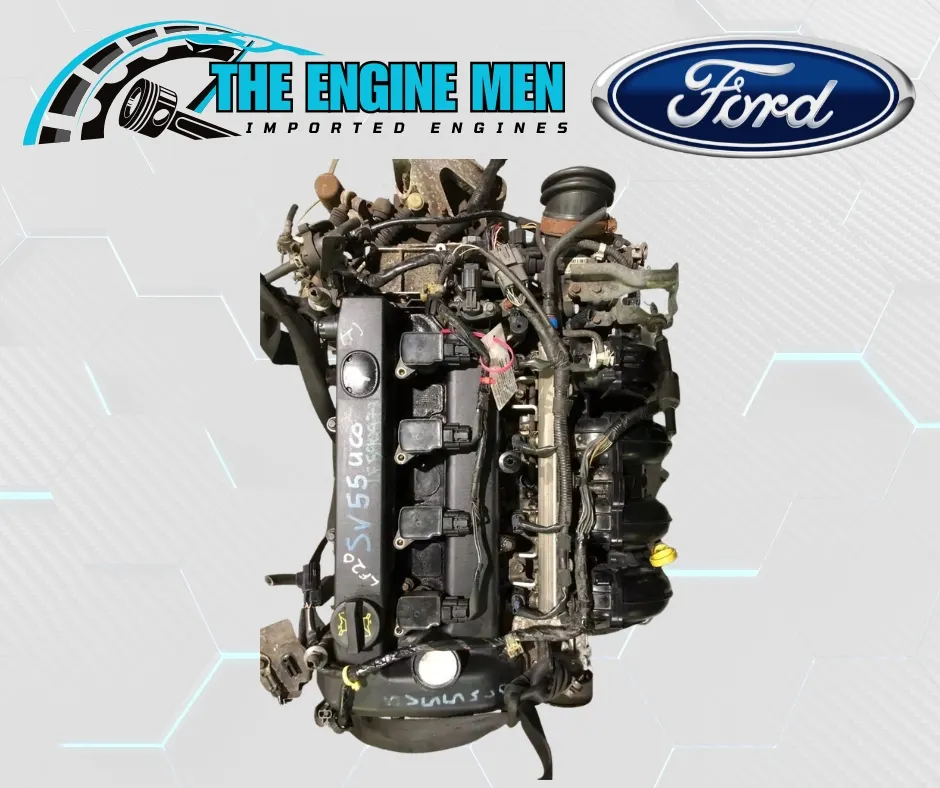

Ford 2.0L LF20 vvti engine
R16,500.00
Ford 2.0L LF20 vvti engine is the engine family or code identified in this listing. LF20 is a 2.0-litre Mazda L-series/MZR petrol engine code that also appears in Ford Duratec applications. The listed LF20 VVT version is naturally aspirated and uses variable cam timing. Because LF20 is more commonly associated with Mazda code nomenclature, verify the donor manufacturer, complete stamped code and cylinder-head equipment rather than assuming that the Ford badge or a general 2.0 Duratec label confirms fitment.
Ford 2.0L LF20 vvti engine specifications and code identification
- Engine code: LF20vvti
- Fuel: Petrol
- Configuration: Four-cylinder
- Displacement: 2.0L
- Listed vehicle: Ford 2.0L LF20 vvti engine
Engine code is especially important for Honda and Hyundai/Kia products because closely related versions can use different cylinder heads, injection parts, cam timing systems and control units. The model name alone is not enough when the engine family spans multiple generations. Match the number stamped on the block to the vehicle data sticker and VIN. If the title contains an additional term such as “non VVT,” “Type R” or a stock reference, verify that detail against the engine before purchase.
Vehicle compatibility for LF20vvti
Provide the vehicle VIN, model year, gearbox and the code from the block. Compare the recipient engine’s intake and exhaust manifolds, VVT solenoid, crank and cam sensors, sump, mounts, oil filter location and wiring. Some Ford and Mazda L-series engines share architecture but use model-specific components. Confirm which ancillaries and ECU-related parts are included.
Before arranging the replacement, compare the engines side by side. Check the gearbox interface, sump, mount positions, intake and exhaust connections, radiator and heater outlets, accessory brackets and sensor plugs. Establish whether the replacement includes the manifolds, fuel system, ignition components, turbocharger where fitted and engine wiring. Ask which parts must be transferred and confirm that the ECU and immobilizer can work with the replacement’s code. An installer can check differences before removing the old engine, reducing delays during the swap.
Installation considerations for Ford 2.0L LF20 vvti engine
Inspect the VVT oil-control components, timing chain system, oil condition and cooling circuit. Check that the replacement’s cam timing sensors and variable valve timing connectors match the car. Resolve oil-pressure or sludge-related problems before fitting, because VVT operation depends on clean, correctly specified oil. After installation, scan for cam timing and sensor codes and monitor idle and warm-up behavior.
Use the service information for the exact vehicle when selecting oil, coolant, filters and installation procedures. Diagnose the original engine failure before fitting a replacement. Overheating, low oil pressure, a timing-drive fault or contaminated fuel can affect related components and cause repeat damage. Once the engine is in place, check fluid levels, wiring grounds and connectors, then scan for stored faults. Confirm normal idle, charging, temperature and leak-free operation before performing a road test. In particular, review Ford/Mazda L-series identification and variable valve timing with the installer, since that detail distinguishes this unit from related engines that share a model badge or displacement. Keep the donor engine code and transferred-part list with the vehicle service record for future maintenance and diagnosis.
Order the correct Ford 2.0L LF20 vvti engine
For a fitment check, provide the VIN, engine code, production year, gearbox and drivetrain details. Send a clear photograph of the stamping, particularly when the listing groups multiple codes or uses an inventory SKU. Ask whether the unit is a complete engine or a long block and confirm which ancillaries are supplied. Browse the engine and gearbox catalogue and verify the replacement against the original specification before ordering.
For background, consult Mazda LF/MZR engine technical overview. It helps explain Ford/Mazda L-series identification and variable valve timing, while the stamped code and recipient VIN determine fitment. A correctly matched Ford 2.0L LF20 vvti engine gives the installer a sound basis for component transfer and commissioning.
Can you deliver the Ford 2.0L LF20 vvti engine nationwide?
Yes. The Engine Men ships the Ford 2.0L LF20 vvti engine nationwide across South Africa. Provide your delivery town or suburb when requesting a quote so the team can confirm the shipping cost and arrangements for your address.
Will the Ford 2.0L LF20 vvti engine fit in my vehicle?
If your vehicle is one of the applications named in the product title and its original engine matches LF20vvti, this is the listed replacement specification. The product is identified for Ford 2.0L LF20 vvti engine. Before ordering, also match the vehicle year and generation, transmission, drivetrain, market specification, ECU, sensors and ancillary components. A shared engine code alone does not always guarantee a direct fit. Send The Engine Men your VIN and a photo of the original engine code for a fitment check.
Can you supply and fit the Ford 2.0L LF20 vvti engine into my car?
The Engine Men offers an engine supply and fit service. Contact the team with your vehicle details to confirm that the Ford 2.0L LF20 vvti engine is suitable, check installation availability and request a quote. Engines supplied and fitted by The Engine Men are subject to a 6-month / 20,000-kilometre guarantee under the applicable terms. A service by The Engine Men three months after the invoice date is required for the remaining three months of the guarantee to apply.
Is the Ford 2.0L LF20 vvti engine brand new or second hand?
The Ford 2.0L LF20 vvti engine is a used engine, not a brand-new unit. The Engine Men sources used engines from the UK. Unless specifically stated otherwise in writing, engines are represented as having mileage below 100,000 kilometres. Mileage information is based on details available to The Engine Men and/or supplied with the engine.
Can you export the Ford 2.0L LF20 vvti engine to Namibia, Botswana or Zimbabwe?
Yes. The Engine Men can export the Ford 2.0L LF20 vvti engine to Namibia, Botswana and Zimbabwe. Contact the team with the destination town and product details to confirm the export quote, transport arrangements, required documentation and expected delivery timeframe.
How long does delivery of the Ford 2.0L LF20 vvti engine take?
The Engine Men ships the Ford 2.0L LF20 vvti engine nationwide across South Africa. Delivery timing depends on stock availability, destination and transport arrangements. Contact the team with your location and product details for a current dispatch and delivery estimate before ordering.