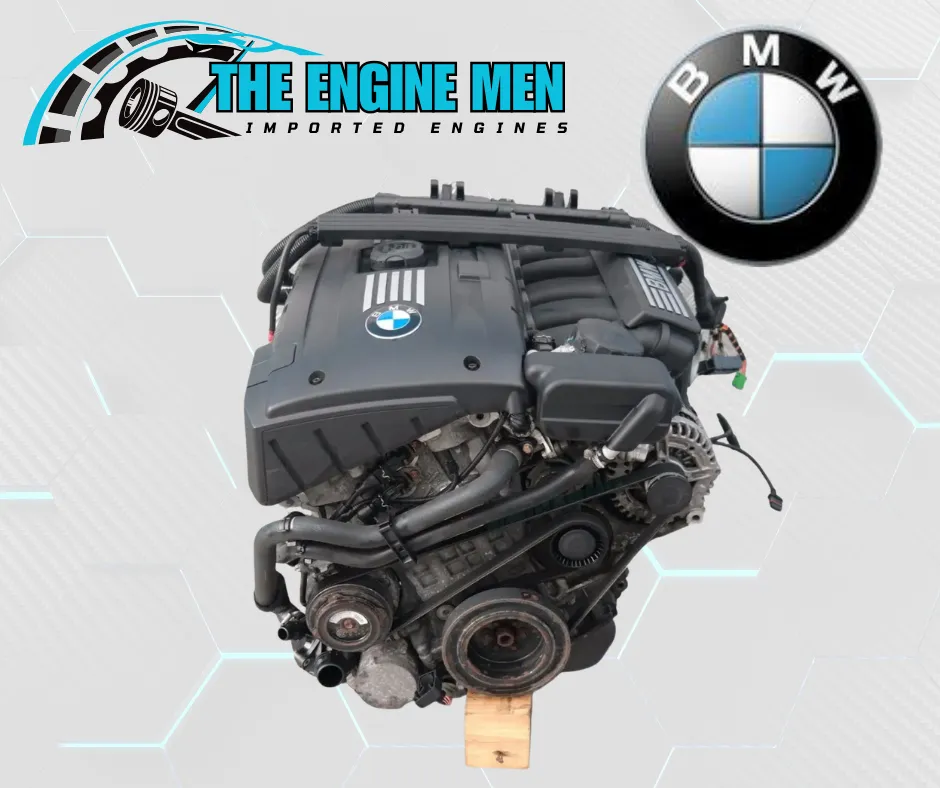

BMW 330 E90 N52B30 Plastic Tappet Cover Engine
R37,000.00
BMW 330 E90 N52B30 Plastic Tappet Cover Engine names a 3.0-litre inline-six configuration used in 330 E90 N52B30 Plastic Tappet Cover. N52B30 is BMW’s 3.0-litre inline-six with Valvetronic and Double VANOS. The product’s plastic tappet-cover description is a visible configuration cue, but the N52 variant and chassis-specific ancillaries still need confirmation.
- Engine code: N52B30
- Listed capacity: 3.0-litre
- Fuel: Petrol
- Configuration: inline-six
- Induction/fuel system: naturally aspirated petrol
- Vehicle application: 330 E90 N52B30 Plastic Tappet Cover
- Variant detail: N52B30 is BMW’s 3
BMW 330 E90 N52B30 Plastic Tappet Cover Engine Technical overview and installation
Match the engine stamp to the VIN, production date, transmission and drivetrain before purchase. Check E90 engine revision, electronic throttle, Valvetronic parts, oil sump, sensors, wiring and gearbox. Product names describe the intended application, but equipment can change by model year and market.
N52B30 engine design and specification
N52B30 is BMW’s 3.0-litre inline-six with Valvetronic and Double VANOS. The product’s plastic tappet-cover description is a visible configuration cue, but the N52 variant and chassis-specific ancillaries still need confirmation. The stated naturally aspirated petrol and inline-six layout help distinguish this unit from other engines with a similar capacity. Full code suffixes can still change injection, timing, turbo, emissions equipment or calibration. Confirm the donor version and whether the seller supplies a long block or a dressed engine.
Check whether the cylinder head, intake, exhaust, fuel equipment, sensors and engine wiring match the recipient. Turbo models also require compatible boost plumbing and turbo oil/coolant connections. Do not assume shared displacement or a related family name makes another code a direct replacement.
N52B30 fitment for 330 E90 N52B30 Plastic Tappet Cover
Check E90 engine revision, electronic throttle, Valvetronic parts, oil sump, sensors, wiring and gearbox. Confirm the donor body style, gearbox and drive layout. Front-, rear- and all-wheel-drive versions may use different sumps, mounts and brackets; commercial vehicles can also have different cooling and accessory layouts.
Compare the original and replacement mounts, sump, gearbox interface, intake and exhaust routing, sensor plugs, fuel connections and accessory positions. Confirm which ancillaries are supplied and which must transfer. Photograph connectors and label parts before dismantling.
What to verify before ordering BMW 330 E90 N52B30 Plastic Tappet Cover Engine
Ask for the stamped engine code, donor details and a VIN-based compatibility check. N52B30 is BMW’s 3 If the listing abbreviates a code or groups variants, have the supplier identify the exact assembly in writing.
Check included injectors, fuel pump or rail, turbo where fitted, manifolds, sensors, loom and brackets. Verify ECU/immobiliser, emissions equipment and transmission compatibility. A workshop can compare donor and recipient part numbers before removing the original unit.
Choosing a N52B30 replacement
A replacement may be appropriate after internal damage, low compression, bearing failure, overheating or excessive oil consumption when rebuilding is uneconomical. First diagnose the original failure: a blocked oil feed, cooling fault, contaminated fuel system or failed turbo can damage the replacement if left unresolved.
Confirm the assembly’s condition, included parts, warranty and any checks required before installation. Record the donor code and transferred components for future servicing.
Installation and commissioning
Use service information for the exact vehicle and engine version. Inspect accessible seals, hoses and connectors. Fit fresh oil and filter unless service history is verified, and check the radiator, thermostat, water pump, fuel lines and intake for contamination or damage.
Seat the mounts without strain, align the gearbox connection and reconnect grounds, sensors, fuel lines and charge-air pipes to the correct ports. Refill and bleed cooling circuits and prime oil or fuel systems as specified for this engine. Follow any required ECU coding procedure.
At first start, monitor oil pressure, coolant circulation, idle and diagnostic data. Check for leaks, smoke, misfires, abnormal noise and warning lights. Once the engine reaches operating temperature, recheck fluids and scan the control modules before a cautious road test.
Service checks for the N52B30 engine
Follow the recipient vehicle’s fluid and service specifications. Diesel installations need clean fuel, correct injector operation and sound turbo/emissions parts. Turbo petrol units require attention to oil lines, boost hoses and ignition. Check the timing drive, cooling system and intake sealing on all versions.
Keep the engine code, VIN check, transferred parts and diagnostic results with the service record. Investigate warning codes before extended driving.
Order the correct BMW 330 E90 N52B30 Plastic Tappet Cover Engine
Provide the VIN, model year, gearbox, drivetrain and a photo of the engine stamp. Confirm the full code and included components before ordering. Browse the engine and gearbox catalogue to compare the listing with your original.
For service and application information, consult BMW technical and owner documentation. Confirm parts and procedures for the vehicle identification number before fitting.
Can you deliver the BMW 330 E90 N52B30 Plastic Tappet Cover Engine nationwide?
Yes. The Engine Men ships the BMW 330 E90 N52B30 Plastic Tappet Cover Engine nationwide across South Africa. Provide your delivery town or suburb when requesting a quote so the team can confirm the shipping cost and arrangements for your address.
Will the BMW 330 E90 N52B30 Plastic Tappet Cover Engine fit in my vehicle?
If your vehicle is one of the applications named in the product title and its original engine matches N52B30, this is the listed replacement specification. The product is identified for BMW 330 E90 N52B30 Plastic Tappet Cover Engine. Before ordering, also match the vehicle year and generation, transmission, drivetrain, market specification, ECU, sensors and ancillary components. A shared engine code alone does not always guarantee a direct fit. Send The Engine Men your VIN and a photo of the original engine code for a fitment check.
Can you supply and fit the BMW 330 E90 N52B30 Plastic Tappet Cover Engine into my car?
The Engine Men offers an engine supply and fit service. Contact the team with your vehicle details to confirm that the BMW 330 E90 N52B30 Plastic Tappet Cover Engine is suitable, check installation availability and request a quote. Engines supplied and fitted by The Engine Men are subject to a 6-month / 20,000-kilometre guarantee under the applicable terms. A service by The Engine Men three months after the invoice date is required for the remaining three months of the guarantee to apply.
Is the BMW 330 E90 N52B30 Plastic Tappet Cover Engine brand new or second hand?
The BMW 330 E90 N52B30 Plastic Tappet Cover Engine is a used engine, not a brand-new unit. The Engine Men sources used engines from the UK. Unless specifically stated otherwise in writing, engines are represented as having mileage below 100,000 kilometres. Mileage information is based on details available to The Engine Men and/or supplied with the engine.
Can you export the BMW 330 E90 N52B30 Plastic Tappet Cover Engine to Namibia, Botswana or Zimbabwe?
Yes. The Engine Men can export the BMW 330 E90 N52B30 Plastic Tappet Cover Engine to Namibia, Botswana and Zimbabwe. Contact the team with the destination town and product details to confirm the export quote, transport arrangements, required documentation and expected delivery timeframe.
How long does delivery of the BMW 330 E90 N52B30 Plastic Tappet Cover Engine take?
The Engine Men ships the BMW 330 E90 N52B30 Plastic Tappet Cover Engine nationwide across South Africa. Delivery timing depends on stock availability, destination and transport arrangements. Contact the team with your location and product details for a current dispatch and delivery estimate before ordering.