

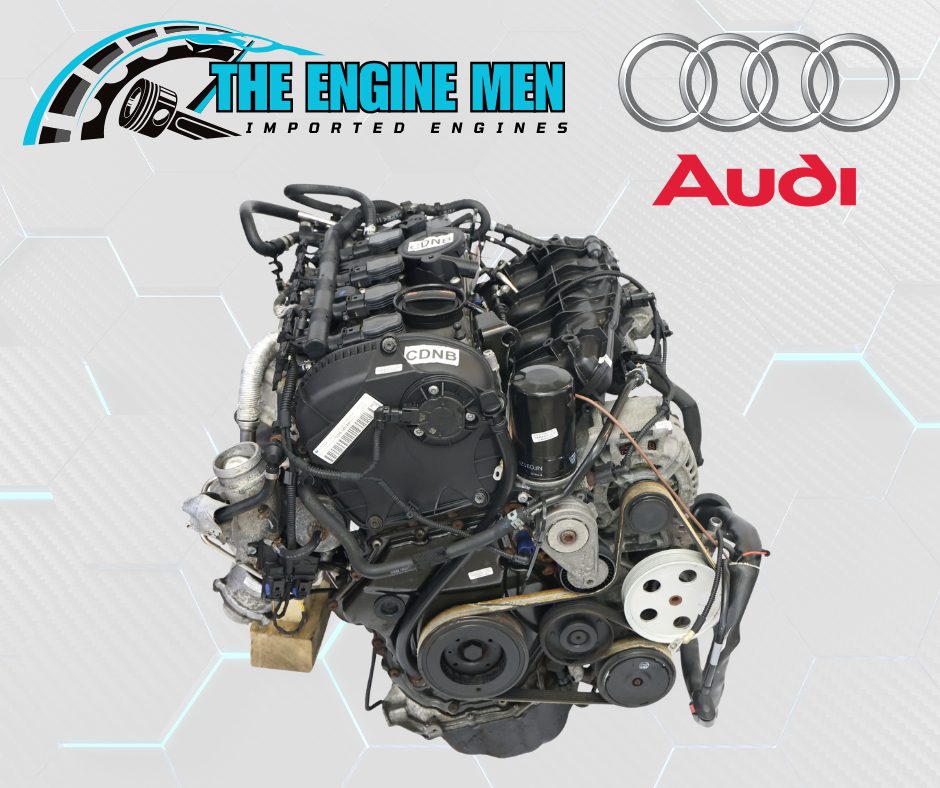

Audi A5/A4/Q5 2.0tfsi CDN engine
R42,500.00
Audi A5/A4/Q5 2.0tfsi CDN engine is the engine code and application named in this listing. CDN is commonly used in parts listings as shorthand for later 2.0 TFSI codes such as CDNB and CDNC. These are 1,984 cc turbocharged direct-injection petrol engines in Audi longitudinal platforms. Depending on the full suffix and market calibration, output varies; CDNB is commonly associated with a lower rating than CDNC. The complete stamped code is therefore essential.
Audi A5/A4/Q5 2.0tfsi CDN engine specifications and engine identity
- Engine code: CDN
- Fuel: Petrol
- Engine capacity: 2.0 litres, except where a complete code confirms a variant
- Induction: Turbocharged
- Injection: Petrol direct injection on TFSI models; 1.8T engines use their application-specific injection system
- Listed application: Audi A5/A4/Q5 2.0tfsi CDN engine
Engine codes help distinguish versions that share a model name or capacity. Read the stamped code on the block and compare it with the car’s data sticker and registration/VIN record. Where the listing uses a shortened family label, request the complete suffix. Power, ECU mapping, emissions equipment, transmission pairing and ancillary parts can change between years and markets. Product images and a “2.0” or “1.8” label are useful for an initial check but cannot confirm direct fitment by themselves.
Audi A5/A4/Q5 2.0tfsi CDN engine fitment and vehicle checks
The product title names A5, A4 and Q5, but their transmissions, quattro systems and ancillary layouts differ by generation. Confirm model series, year, gearbox, drive type, emissions equipment and VIN. An engine advertised under a shortened CDN label may not include the same turbocharger, injectors, wiring or engine-management specification as the original unit.
Before ordering, make a side-by-side component list with the original unit. Record the transmission code, driven wheels and model generation, then compare the sump, mounts, accessory brackets, starter position, exhaust connection, coolant outlets and electrical plugs. Note which sensors are present and where they sit. Ask whether the sale covers a complete dressed engine or a long block. Clarify whether the turbo, manifolds, fuel system, alternator, starter, injectors, engine loom and brackets are supplied or must be transferred.
Audi A5/A4/Q5 2.0tfsi CDN engine replacement preparation
Compare the turbocharger and manifold, high-pressure fuel pump, rail and injector connectors, oil sump, engine mounts, accessory drive, sensors and exhaust connections. Ask whether the unit is CDNB, CDNC or another full suffix, and request a parts list showing which ancillaries are included. Inspect the charge-air pipes and intercooler for oil or debris if the previous turbo failed. Resolve that cause before starting a replacement.
Before installation, diagnose the original failure and prepare the supporting systems rather than treating the engine as an isolated part. Check oil and coolant condition, radiator and thermostat operation, hoses, water pump, mounts and wiring. Renew oil and filter unless recent service is documented. On turbo petrol models, inspect the oil lines, intercooler and intake for debris; on naturally aspirated units, verify fuel pressure and intake sealing. At first start, monitor oil pressure and coolant temperature, inspect for leaks and abnormal noise, and read stored ECU faults. The installer should confirm sensor connections, idle quality and system readiness before the vehicle is road-tested.
Order the correct Audi A5/A4/Q5 2.0tfsi CDN engine replacement
Send the VIN and a clear photograph of the original engine stamping when requesting a compatibility check. Ask the supplier to confirm the complete engine code, the included components and any parts expected to move over from the old unit. If the engine code and product wording do not agree, resolve that discrepancy before placing the order. Browse the engine and gearbox catalogue and compare the listed unit with the vehicle data.
For more technical context, consult Audi 1.8 and 2.0 TFSI workshop information. That reference can help identify turbocharged direct injection and suffix-specific output, but final fitment should still be confirmed against the recipient vehicle and the complete stamped code. A carefully matched Audi A5/A4/Q5 2.0tfsi CDN engine can make the replacement process clearer for the buyer and installer.
Can you deliver the Audi A5/A4/Q5 2.0tfsi CDN engine nationwide?
Yes. The Engine Men ships the Audi A5/A4/Q5 2.0tfsi CDN engine nationwide across South Africa. Share your delivery town or suburb when requesting a quote so the team can confirm the shipping cost and arrangements for your address.
Will the Audi A5/A4/Q5 2.0tfsi CDN engine fit in my vehicle?
The Audi A5/A4/Q5 2.0tfsi CDN engine is listed for Audi A5, Audi A4 and Audi Q5 2.0 TFSI models originally fitted with the CDN engine. It will fit a vehicle when the original engine code and the vehicle specification match. Before ordering, confirm the model year, generation, transmission, drivetrain, ECU and ancillary components against your vehicle. For the BGU listing, verify the complete engine code and fuel-system specification because the product title combines “FSI” and “8V” wording. Send the VIN and a photo of the original engine code to The Engine Men for a fitment check.
Can you supply and fit the Audi A5/A4/Q5 2.0tfsi CDN engine into my car?
The Engine Men offers an engine supply and fit service. Contact the team with your vehicle details to confirm that the Audi A5/A4/Q5 2.0tfsi CDN engine is suitable, check installation availability and request a quote. Engines fitted by The Engine Men are subject to a 6-month / 20,000-kilometre guarantee, subject to the applicable terms and conditions. A service by The Engine Men three months after the invoice date is required for the remaining three months of the guarantee to apply.
Is the Audi A5/A4/Q5 2.0tfsi CDN engine brand new or second hand?
The Audi A5/A4/Q5 2.0tfsi CDN engine is a used engine, not a brand-new unit. The Engine Men sources used engines from the UK. Unless specifically stated otherwise in writing, engines are represented as having mileage below 100,000 kilometres. Mileage information is based on details available to The Engine Men and/or supplied with the engine.
Can you export the Audi A5/A4/Q5 2.0tfsi CDN engine to Namibia, Botswana or Zimbabwe?
Yes. The Engine Men can export the Audi A5/A4/Q5 2.0tfsi CDN engine to Namibia, Botswana and Zimbabwe. Contact the team with the destination town and product details to confirm the export quote, transport arrangements, required documentation and expected delivery timeframe.
How long does delivery of the Audi A5/A4/Q5 2.0tfsi CDN engine take?
Delivery timing for the Audi A5/A4/Q5 2.0tfsi CDN engine depends on stock availability, destination and transport arrangements. Contact The Engine Men with your location and product details for a current estimate before ordering. The team can confirm the expected dispatch and delivery timeframe for your order.