
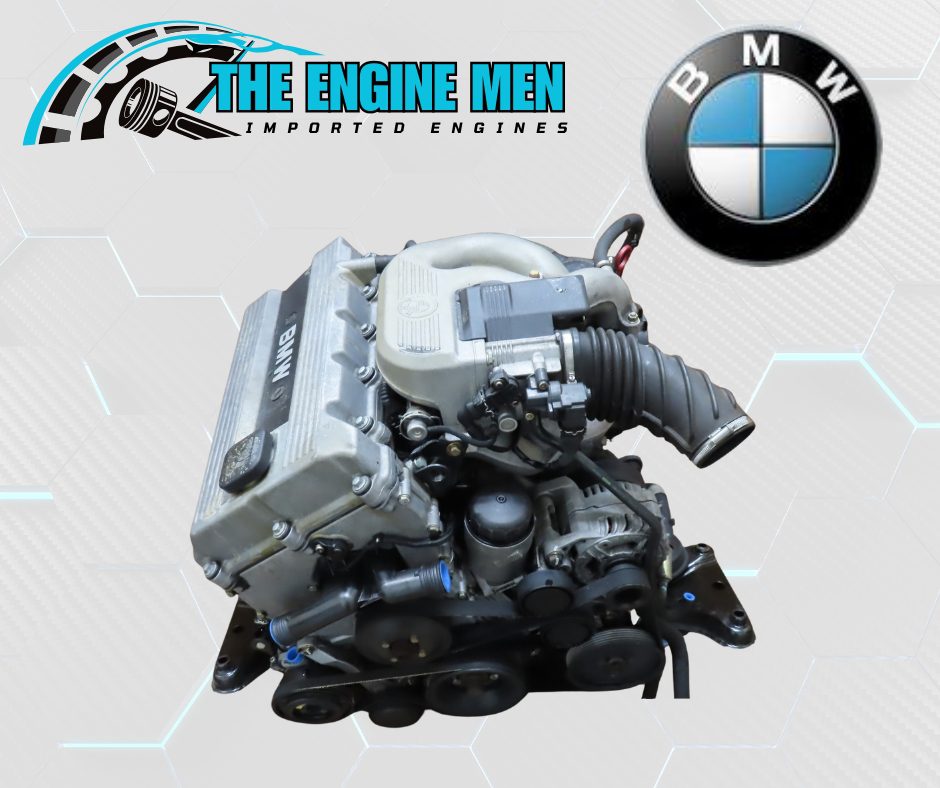

BMW 318i e36 M44 16v engine
R1,350.00
The BMW M44 (specifically the M44B19) is a 1.9L naturally aspirated inline-four petrol engine produced between 1996 and 2000. It served as the final evolution of BMW’s chain-driven, 16-valve four-cylinder engines before the introduction of the N-series.
Technical Specifications
| Feature | Details |
|---|---|
| Displacement | 1,895 cc (1.9L) |
| Configuration | Inline-4, DOHC, 16 valves |
| Bore x Stroke | 85.0 mm x 83.5 mm |
| Compression Ratio | 10.0:1 |
| Output | ~138–143 hp @ 6,000 rpm |
| Torque | 180 Nm (133 lb-ft) @ 4,300 rpm |
| Management | Bosch Motronic 5.2 with Mass Air Flow (MAF) sensor |
Key Improvements over the M42
The M44 replaced the BMW M42 and introduced several refinements for better efficiency and reduced noise (NVH):
- Valvetrain: Moved to roller rocker arms, reducing friction by approximately 70%.
- Crankshaft: Replaced the forged steel unit of the M42 with a grey cast iron crankshaft.
- Intake: Features a dual-length intake manifold (DISA) to optimize torque across the rev range.
- Ignition: Utilizes a modern distributorless coil-on-plug ignition system.
Common Applications
The M44 was primarily used in BMW’s entry-level performance and compact models:
- 3 Series (E36): 318is (Coupe), 318ti (Compact), and North American 318i sedans.
- Z3 Roadster: Early 1.9L models (1996–1999).
Reliability & Maintenance
The M44 is considered a robust engine, often exceeding 250,000 km with proper care. However, it has specific known weaknesses:
- Cooling System: Like many BMWs of this era, the plastic water pump impellers and thermostat housings are prone to cracking and causing overheating.
- Timing Chain Guides: The plastic guides and tensioners can wear out around 150,000 km, leading to a “rattle” on cold starts.
- PCV / Vacuum Leaks: Aging rubber hoses and the crankcase ventilation system often cause rough idles.
- Non-Interference Design: Crucially, the M44 is a non-interference engine, meaning a timing chain failure is unlikely to cause catastrophic internal valve-to-piston damage